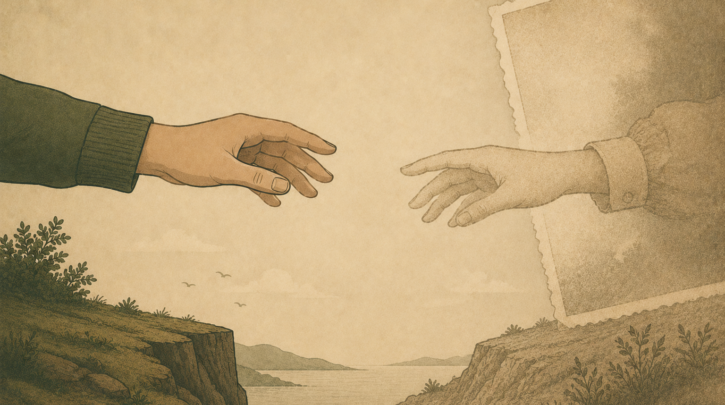

It usually starts small — a DNA kit at Christmas, a grandmother’s funeral, a surname someone finally asks about. And then, for millions of the Irish diaspora’s descendants, it becomes something else entirely: a years-long, oddly urgent project of getting the family’s Irishness back. Not learning about it. Reclaiming it.
This essay is about that project — why it grips so many of us now, what reclaiming actually consists of, and what people consistently say it gives them that they did not expect.
Why Now
Three currents converged. DNA testing turned vague heritage into specific percentages and stranger-cousins, making the abstraction suddenly personal. The political weather — Brexit on one shore, American turbulence on the other — sent record numbers toward the Irish passport, and applications became journeys. And underneath both, the generational clock: the emigrant generations’ silence — the “we’re American now” forgetting that assimilation demanded — is two or three generations old, exactly far enough that the grandchildren feel the absence as a question rather than a relief.
What Was Actually Lost
Be precise about the inheritance that thinned: the townland names and the knowledge of which fields; the music and the prayers and the cadence of speech; the Irish language, usually shed a generation before the boat; the living web of cousins, severed into Christmas cards and then nothing. None of it was carelessness — it was the price of arrival, paid deliberately by people protecting their children. Reclaiming is not an accusation against them; it is the luxury they purchased finally being spent.
What Reclaiming Looks Like
- The records: recovering the names, dates, and places — the research that converts “we’re Irish” into Mary Kelly of Cloonfad, who left in 1898. Specificity is the whole difference: heritage in general is a mood; a townland is an address.
- The ground: the trip, and above all the townland day — the consistently reported hinge moment, where the project stops being information.
- The people: the living cousins — the severed web rejoined, letters answered, tea poured; for many the single most healing piece.
- The paper of belonging: for the eligible, citizenship — the State’s own confirmation that the leaving did not end the belonging.
- The textures: a few words of Irish, the right way to make the tea, the music, the saint’s day — small practices that move the heritage from the filing cabinet into the kitchen.
Not sure which record to look for first?
Get the Irish Genealogy Starter Checklist — the ten records to find first, and exactly which free database holds each one.
The Feelings Underneath (Because There Are Feelings)
People undertaking this work report a recognisable arc: the early detective excitement; somewhere in the middle, an unexpected grief — for the famine names, the unmarked graves, the letters that stopped — and frequently a surge of retroactive tenderness toward the emigrant themselves, eighteen years old on a manifest with someone else’s address in their pocket. And at the end, something most describe as settledness: the family story has a beginning now, with coordinates. Children raised after the reclaiming inherit it as fact, the way the silence was once inherited — which may be the project’s realest product.
It Is Not Gatekept
A worry worth retiring: that reclaiming is somehow presumptuous — too late, too diluted, too American or Australian to count. Ireland itself disagrees, structurally: the diaspora provisions in the citizenship law, the heritage infrastructure, the welcome a surname receives at a farm gate are a standing invitation, extended precisely because the leaving was the national story too. The townland does not check percentages. Come as you are; bring the photograph.
Where to Begin, Practically
- Write down everything the living elders know — this week, recorded; it is the only source with a deadline.
- Run the first evening of the method — one census, one certificate, and the project becomes real.
- Set the long goals that fit: the townland found, the trip taken, the eligibility question answered either way.
- And tell the family as you go — reclaiming done aloud recruits the cousins, and the inheritance lands wider.
Frequently Asked Questions
What does “reclaiming Irish heritage” actually mean?
Converting an inherited generality into specific, living connection — documented ancestors, a known townland, reachable relatives, practiced traditions, and where eligible, citizenship. The reclaimer’s test is simple: could you point to it on a map, and would anyone there know your people’s name?
Is it too late if the family lost everything — names, places, all of it?
Almost never — the records did not forget, even where the family had to. The standard method recovers a townland from “somewhere in Ireland” routinely; the silence is two generations deep, but the paper is two centuries deep.
Do I need to qualify for citizenship for any of this to matter?
No — the passport is one room in the house. The research, the townland, the cousins, and the practices are open to every descendant regardless of where the registration calendar drew its lines.
The Return Leg
Your emigrant bought the ticket they could afford: one way. The reclaiming is the family finally completing the round trip — on paper, on the ground, in the kitchen. This page will be here when the cousins ask how you did it; start with the elders, tonight.
Mapping a citizenship claim as well as a family tree? Work through every pathway in the Eligibility Guide.